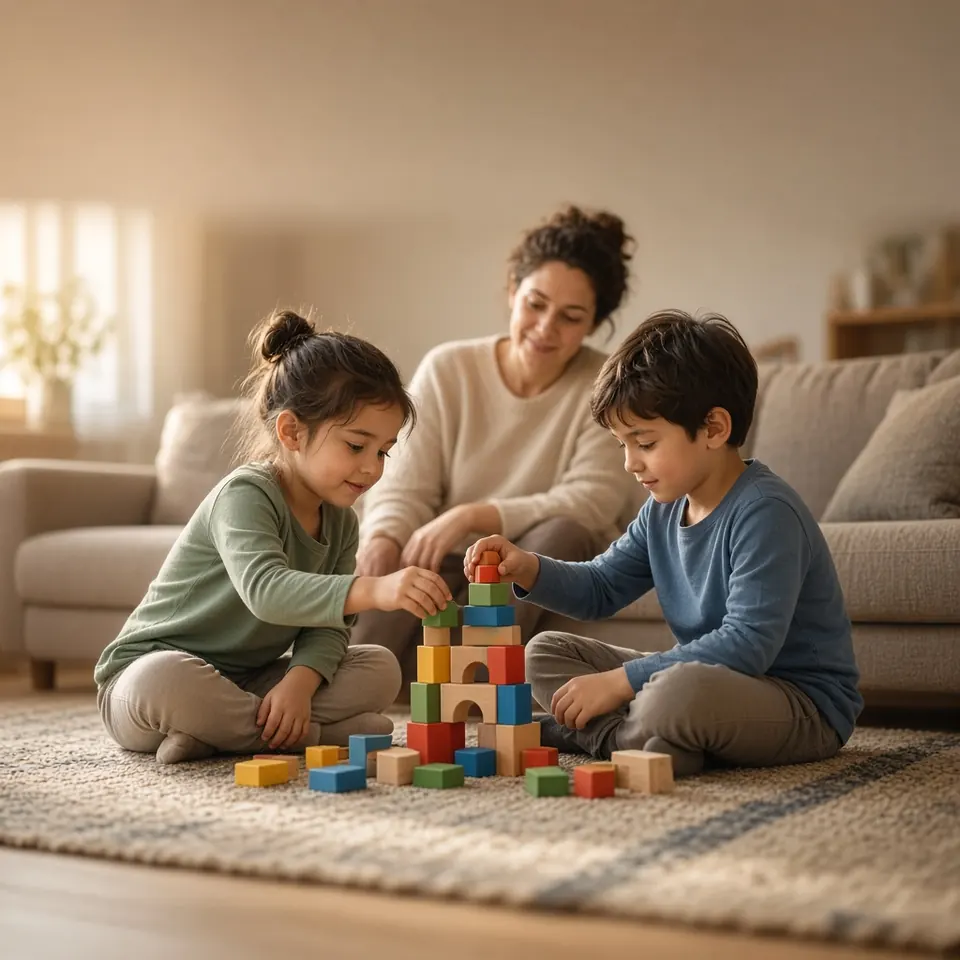
Explaining autism to siblings helps build understanding and empathy. Use simple, positive language, focus on their sibling's strengths, and address questions honestly. For New Jersey families, resources like Liftoff ABA's in-home therapy can support the whole family.
Why Talking to Siblings About Autism Matters
When a child receives an autism diagnosis, the entire family is affected. Siblings often sense differences before they understand them, and without clear, loving explanations, they may fill in the gaps with confusion, worry, or even resentment. Open communication helps siblings develop empathy, reduces anxiety, and strengthens the bond between brothers and sisters. For New Jersey families, starting these conversations early, often with support from early intervention programs like NJEIS-can set the stage for a more harmonious home. Research consistently shows that siblings who understand autism are better equipped to be patient advocates and lifelong friends. By talking openly, you validate each child's experience and create a foundation of trust.
Starting the Conversation: Age-Appropriate Language
How you explain autism depends entirely on your child's age and developmental stage. Young children (ages 3-6) benefit from concrete, sensory-based comparisons. For example: "Your brother's brain works a little differently. Loud sounds might feel really big to him, like a giant drum, so we keep our voices soft." School-age kids (ages 7-12) can grasp more nuance: "Autism means his brain processes information in a unique way. That's why he likes routines and sometimes flaps his hands when he's excited." Teenagers can handle deeper discussions about neurodiversity, social challenges, and the beauty of different perspectives. Always use simple, positive framing: autism is not a disease or a tragedy but a different way of experiencing the world. Avoid labeling behaviors as "bad" or "weird"; instead, describe them neutrally. For NJ families, local libraries and autism organizations like autismnj.org offer age-appropriate book lists to support these conversations.
Using Visuals and Stories
Picture books, social stories, and short videos can make abstract concepts concrete. Many NJ early intervention providers recommend books like "My Brother Charlie" or "All My Stripes" for young siblings. You can also create a simple social story together that explains your family's unique routines. This empowers siblings to become co-navigators rather than passive observers.
What to Say: Focusing on Strengths and Differences
When explaining autism, lead with strengths. Every child with autism has unique talents: a remarkable memory, intense focus on a special interest, or a creative way of seeing patterns. Emphasize that autism is part of what makes their sibling special. For example: "Your sister has an amazing memory for dinosaur facts because her brain loves details. That's part of her autism." Then gently explain challenges: "Sometimes she needs extra help with conversation or gets overwhelmed in busy places. That's okay, we can help her." This balanced approach prevents siblings from viewing autism as solely negative. It also validates their own feelings, they may love their sibling but still struggle with the extra attention or unpredictability. Honesty about differences, combined with celebration of strengths, fosters realistic acceptance.
Addressing Sensory and Behavioral Differences
Siblings often notice sensory reactions-covering ears, avoiding tags, or seeking deep pressure. Explain that these are not choices but natural responses. For instance, "When your brother covers his ears, he's not being rude. Sounds feel much louder to him, so he's protecting himself." Similarly, meltdowns are not tantrums; they are overwhelmed moments. Teach siblings to recognize early signs and to know when to give space or get help. This knowledge reduces frustration and builds a supportive dynamic.
Answering Tough Questions with Honesty and Love
Siblings will ask hard questions. Be prepared to answer directly while maintaining safety and positivity. Common questions include: "Will my sibling ever talk to me normally?" or "Did I cause the autism?" (No, you did not.) or "Why do you spend more time with them?" Validate the feelings behind each question. For example: "I can see you're frustrated when your brother needs extra help. It's okay to feel that way. Let me explain why he needs more support right now, and let's also plan one-on-one time for us." Avoid dismissive statements like "Don't worry about it." Instead, say, "That's a great question. Let me answer it as best I can." If you don't know, it's fine to say, "I'll find out and come back to you." Honesty builds trust.
Supporting Sibling Emotions and Building Empathy
Siblings of children with autism may experience a mix of love, pride, jealousy, embarrassment, and guilt. Creating a safe space for all emotions is crucial. Encourage siblings to keep a journal, draw pictures, or talk to a trusted adult. Validate without fixing: "It sounds really hard when you can't have friends over because of the noise. I hear you." Then problem-solve together. Empathy grows when siblings understand the reasons behind behaviors and feel their own needs matter. Role-playing can help: ask the sibling to imagine having a super-sensitive hearing or needing a strict schedule. This builds compassion. Also, celebrate sibling efforts-acknowledge when they are patient, helpful, or kind. In New Jersey, many families access sibling support groups through organizations like SPAN Parent Advocacy Network or local chapters of the Autism Society. These groups let siblings connect with peers who "get it."
Family Resources in New Jersey: In-Home ABA and More
New Jersey is a strong state for autism services, thanks to the NJ autism insurance mandate requiring most insurers to cover medically necessary ABA therapy. Families can also access NJ FamilyCare (NJ Medicaid) for eligible children, and NJEIS for early intervention from birth to age 3. For school-age children, PerformCare coordinates behavioral health services, and county special-services school districts provide specialized education. One powerful resource is in-home ABA therapy, where a dedicated therapist works one-on-one with the child in the family's natural environment. Providers like Liftoff ABA deliver BCBA-designed, personalized therapy in New Jersey homes with no waitlists, most families start within weeks. This means the entire family learns strategies together, and siblings see therapy as a normal, positive part of daily life. The sibling can even join in on certain goals, like turn-taking or sharing, under professional guidance. Liftoff ABA also helps families with free insurance verification, including for NJ FamilyCare, removing financial barriers. By involving siblings as allies, in-home therapy strengthens the whole family unit.
Practical Tips for Daily Life
Here are everyday ways to foster sibling understanding and connection:
- Create a family "calm corner." A designated quiet space with sensory tools that any family member can use.
- Schedule one-on-one sibling time. Regular outings or activities with each sibling individually to prevent resentment.
- Use a "feelings chart." Help all children name and express emotions, modeling that all feelings are okay.
- Teach sibling-specific communication cues. For example, a visual card that says "I need space" to reduce meltdown triggers.
- Celebrate small wins together. When the child with autism learns a new skill, involve the sibling in the celebration.
- Read neurodiversity-affirming books together. Titles like "A Friend for Henry" or "The Rabbit Listened" promote empathy.
- Be a role model. Your calm, positive framing of autism sets the tone. Siblings learn from how you talk about differences.
Remember, you are not alone. New Jersey offers a wealth of support, and providers like Liftoff ABA are here to walk alongside your family. With patience, honesty, and love, siblings can become your child's greatest champions.
- Start the conversation early and keep it age-appropriate.
- Emphasize that autism is a different way of processing the world, not a deficit.
- Encourage siblings to ask questions and express feelings openly.
- Create positive sibling bonding experiences through shared interests.
- Seek family-centered support like Liftoff ABA's in-home therapy in NJ.
- Connect with NJ-specific resources like NJEIS, PerformCare, and NJ FamilyCare.
Not sure what your plan covers?
Liftoff ABA verifies your New Jersey insurance benefits for free, no obligation, usually the same day.
Check my coverageFrequently asked questions
What age should I start talking to my child about their sibling's autism?
How do I explain a meltdown to a sibling without scaring them?
What if my child feels jealous or left out because of the extra attention their sibling needs?
Are there support groups for siblings of children with autism in New Jersey?
How can Liftoff ABA help my whole family, not just my child with autism?
Start ABA therapy in New Jersey, no waitlist
We'll verify your insurance for free and map out your child's next steps. Most families start within weeks.
Apply for ABA