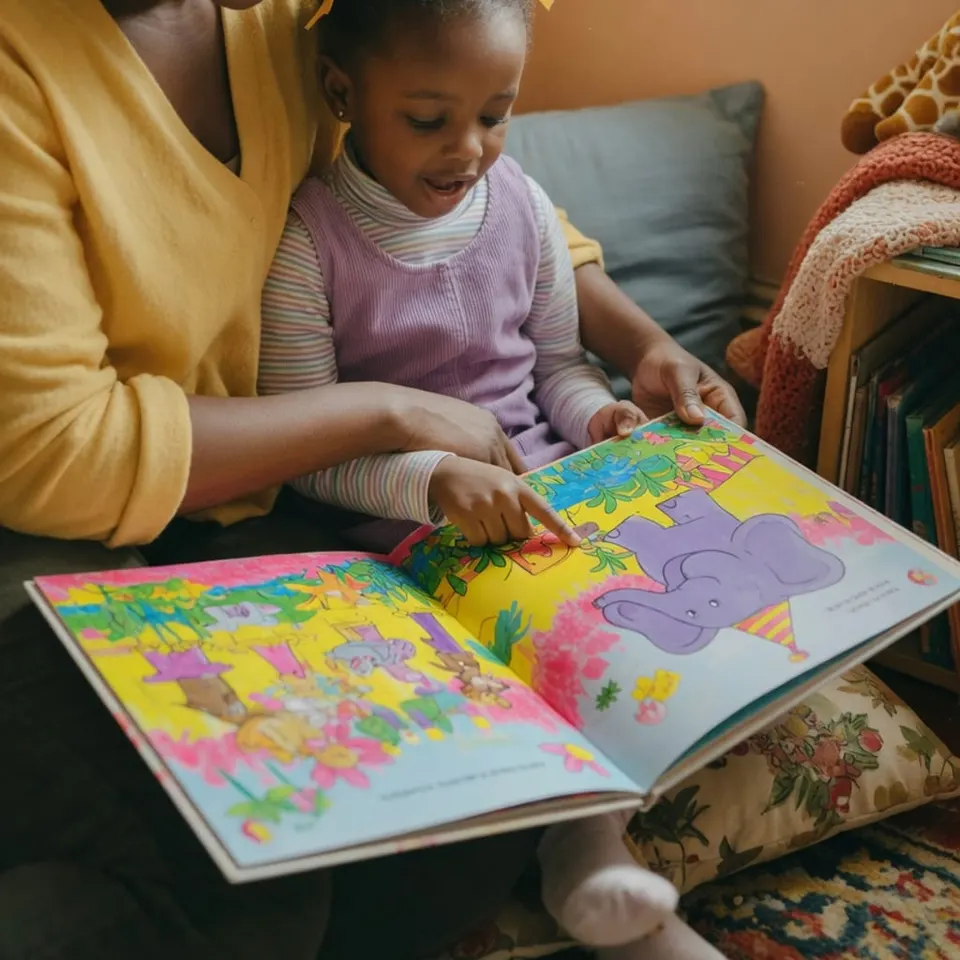
Imitation is the ability to watch someone and copy their actions, words, or movements. ABA therapy often starts with imitation because it opens the door to learning language, play, and daily routines through observation. New Jersey families can access ABA through insurance, NJ FamilyCare, or early intervention programs.
What Is Imitation and Why Does It Matter?
Imitation is the ability to observe another person's action and reproduce it. A toddler who claps after seeing a parent clap, waves goodbye after watching a sibling, or repeats a silly sound is using imitation. It seems simple, but imitation is one of the building blocks of early development. Children learn much of what they know about the world by watching the people around them, and imitation is the bridge between watching and doing.
For many children, imitation grows almost effortlessly through everyday interactions. For children on the autism spectrum, it may develop more slowly or in less typical ways. Understanding why this happens helps explain why applied behavior analysis (ABA) so often begins its work here.
How Imitation Connects to Language, Play, and Learning
Imitation is closely tied to several other skills that children need for everyday life. When a child learns to imitate, they are also practicing attention, motor planning, and the understanding that other people's behavior can guide their own. These skills support:
- Language: Many children first learn words by copying sounds and mouth movements they hear.
- Play: Pretend play, such as feeding a doll or stirring a pot, often begins with copying a caregiver.
- Self-care: Brushing teeth, putting on a shirt, and washing hands are frequently learned through watching and copying.
- Social connection: Matching another person's actions is an early way to share attention and enjoy being with others.
When imitation is limited, a child may miss many of these natural learning opportunities. This is one reason ABA professionals consider imitation a high-value target. Building it can make other skills easier to teach.
Why Imitation Is Often a Starting Point in ABA
Applied behavior analysis is an evidence-based approach that breaks skills into small, teachable steps and uses positive reinforcement to build them. Because imitation supports so many other abilities, behavior analysts frequently assess it early in the process. A Board Certified Behavior Analyst (BCBA) typically looks at a child's imitation skills during an initial assessment, noting which types of imitation the child already shows and which need support.
Starting with imitation offers several practical advantages:
- It creates a shared way for the child and therapist to communicate and learn together.
- It gives therapists a reliable tool for teaching new actions, words, and routines.
- It supports attention to people and to the task at hand.
- It can lead to faster progress in later goals, such as requesting, labeling, and playing with peers.
Every child's plan is individual. A BCBA designs goals based on the child's strengths, interests, and family priorities, so imitation is one piece of a larger picture rather than a universal first step for everyone.
Types of Imitation Targets in ABA
Imitation is not a single skill. ABA programs usually break it into several categories, each taught with care:
Motor Imitation
Motor imitation involves copying body movements, such as clapping, touching the head, jumping, or waving. These are often early targets because they are concrete, visible, and easy to reinforce.
Object Imitation
Object imitation focuses on using toys and everyday items the way others do, such as pushing a toy car, stacking blocks, or brushing hair with a comb. This connects directly to play skills.
Vocal and Verbal Imitation
Vocal imitation includes copying sounds, syllables, and words. Verbal imitation is often a bridge to spontaneous speech, though not every child will use speech, and communication goals are always discussed with the family.
Imitation of Play and Routines
Here, children learn to join in longer sequences, such as a bath routine, a snack routine, or a turn-taking game. These skills help children participate more fully in family and school life.
How ABA Therapists Teach Imitation
Imitation instruction in ABA is structured, playful, and paced to the child. While methods vary by plan, many programs share these common features:
- Clear, consistent cues: The therapist uses a simple instruction, such as "Do this," paired with a model of the action.
- Prompting: Help is given at first, such as hand-over-hand guidance or a visual model, and then faded so the child performs more independently.
- Reinforcement: Correct attempts are followed by preferred items, praise, play, or other rewards that the child enjoys.
- Short, frequent trials: Brief practice repeated throughout the day tends to work better than long, unbroken sessions.
- Generalization: Skills are practiced in different places, with different people, and with different materials so they hold up outside the therapy room.
Data collection is a central part of ABA. Therapists track each trial, which helps the team see what is working and adjust the plan when needed. Families are typically included in these decisions and kept informed about progress.
Insurance, Coverage, and Access in New Jersey
New Jersey has an autism insurance mandate that requires many health plans to cover autism-related treatment, including ABA when medically necessary and prescribed. Coverage details vary by plan, so families are encouraged to review their specific benefits and ask questions about authorization, approved hours, and provider network status. For an overview of how coverage rules apply, families can consult the CDC's autism resources.
Public programs are also available. NJ FamilyCare is New Jersey's Medicaid program, and it may cover ABA services for eligible children. Families can call NJ FamilyCare at 1-800-701-0710 to learn about eligibility. For children under age 3, the NJ Early Intervention System (NJEIS) can evaluate developmental needs and connect families with services at no cost to eligible children. NJEIS can be reached at 1-888-653-4463. For school-age children, county special-services school districts and PerformCare (1-877-652-7624) can help families understand behavioral health and related supports.
Liftoff ABA provides in-home ABA therapy across New Jersey. Families who choose in-home care often value working in the child's own environment, and Liftoff ABA has no waitlists, with most families starting within weeks. Each child receives one dedicated therapist, and every plan is designed and supervised by a BCBA. Liftoff ABA accepts many major insurance plans as well as NJ Medicaid through NJ FamilyCare, and it verifies benefits for free. Families can call (973) 436-5835 to talk through options.
How Parents Can Support Imitation at Home
Parents are a powerful part of the learning team. Simple, joyful games can reinforce what children are learning in therapy. Consider these ideas:
- Mirror play: Copy your child's movements and sounds, then wait to see if they copy you back.
- Silly actions: Clap, wave, or tap your head with exaggerated motions and invite your child to join.
- Bath and snack routines: Narrate each step and show the action before inviting your child to try.
- Follow the leader: Take turns leading simple actions, which builds both imitation and turn-taking.
- Celebrate attempts: Praise effort, not just perfect copies, so your child stays motivated.
Keep sessions short and fun. Stop when your child seems tired or disengaged, and return to the game later. Share what works with your child's therapy team, since consistency across settings helps skills generalize.
Setting Realistic Expectations and Measuring Progress
Imitation skills often develop in stages rather than all at once. A child may first copy large motor actions, then move to smaller movements, then to object use, and later to sounds and words. Progress can look uneven, with new skills appearing and then becoming more reliable over time. Families should expect some ups and downs and should not compare their child's path to another child's.
Good ABA programs measure progress through ongoing data, periodic review, and family conversations. If a goal is not moving, the BCBA can adjust the teaching approach. If a skill is mastered, the team can move on to the next target. Staying in close communication with your therapist is one of the most helpful things you can do.
Moving Forward With Confidence
Imitation may seem like a small skill, but it opens doors to language, play, self-care, and connection. ABA often starts here because each step builds the foundation for what comes next. Whether your child is just beginning to explore imitation or is ready for more complex copying, a thoughtful plan can help. If you have questions about in-home ABA in New Jersey, Liftoff ABA is happy to talk with you at (973) 436-5835.
- Imitation is a foundational skill that helps children learn language, play, and self-care by watching others.
- Many children on the autism spectrum find imitation difficult, so ABA therapists often teach it deliberately and in small steps.
- Imitation targets include motor actions, object use, sounds, words, and play routines, chosen to match each child's needs.
- Progress is built through reinforcement, prompting that is gradually faded, and frequent practice in natural settings.
- New Jersey families can explore coverage through private insurance, NJ FamilyCare, or NJ Early Intervention for children under age 3.
- Parents play an important role by practicing imitation games at home and celebrating small wins.
Not sure what your plan covers?
Liftoff ABA verifies your New Jersey insurance benefits for free, no obligation, usually the same day.
Check my coverageFrequently asked questions
What is imitation in the context of autism?
Why do ABA therapists focus on imitation first?
Does New Jersey insurance cover ABA therapy for autism?
What if my child is under age 3?
How can I help my child practice imitation at home?
Start ABA therapy in New Jersey, no waitlist
We'll verify your insurance for free and map out your child's next steps. Most families start within weeks.
Apply for ABA