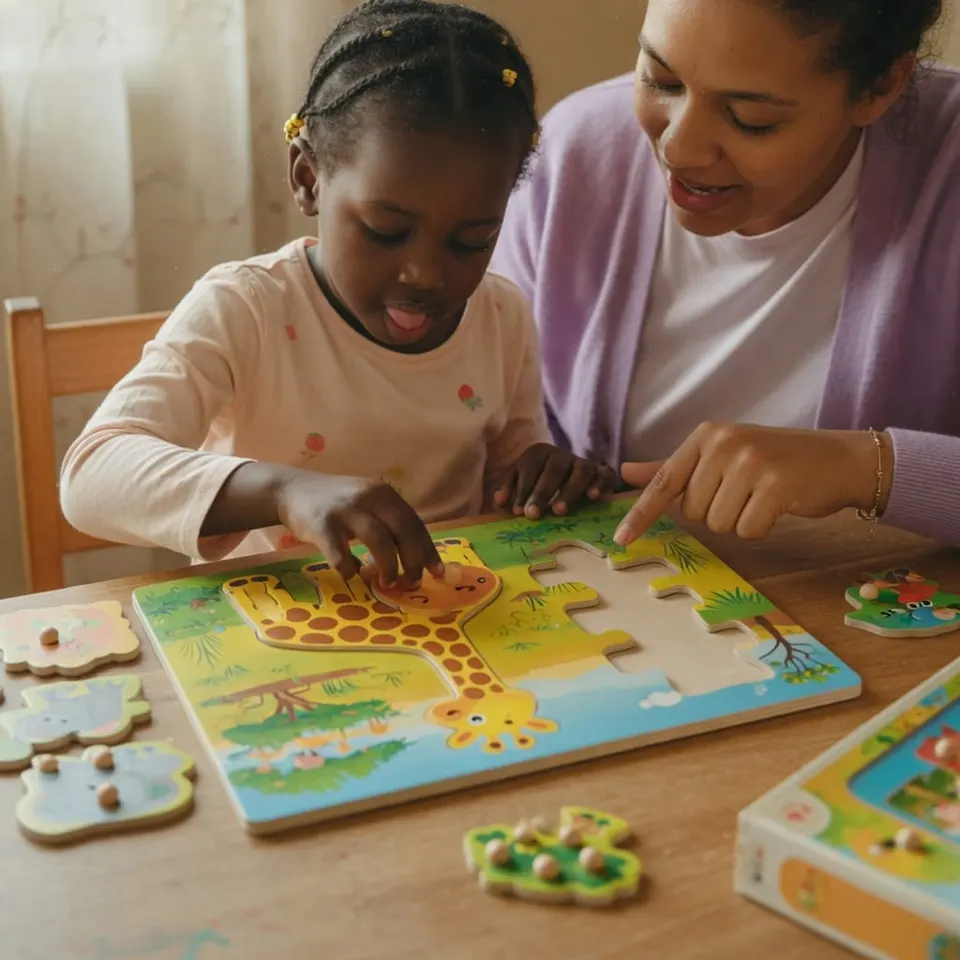
Discrete Trial Training (DTT) is a structured ABA teaching method that breaks skills into small steps, using clear instructions, prompts, and rewards. You can use DTT at home with guidance from a BCBA, and it works well alongside naturalistic play. Liftoff ABA provides in-home BCBA-led therapy across New Jersey, with no waitlists, and can help you get started.
What Is Discrete Trial Training (DTT)?
Discrete Trial Training (DTT) is a core teaching strategy used in Applied Behavior Analysis (ABA) therapy. It was developed by Dr. O. Ivar Lovaas and has decades of research supporting its effectiveness for teaching children with autism new skills. DTT breaks a complex skill into small, manageable steps, and each step is taught through a series of trials. Each trial has a clear beginning (the instruction), a middle (the child's response), and an end (the consequence, usually a reward). This structure helps children learn by repetition and positive reinforcement.
As a parent, you might hear DTT described as the "table-top" or "structured" part of ABA. It is often contrasted with naturalistic teaching, like incidental teaching or NET (Natural Environment Teaching), which happens during play and daily routines. Both are valuable, and a good ABA program will include both. DTT is especially useful for teaching foundational skills like attending, matching, labeling, and following instructions.
Why Use DTT at Home?
Using DTT at home can be a powerful way to reinforce what your child learns during therapy sessions. It provides consistency and helps your child practice skills in a familiar environment. Moreover, when you participate in DTT, you become an active part of your child's learning team. Many BCBAs encourage parent involvement because it leads to better outcomes and helps skills generalize across people and settings.
Another practical reason: in-home ABA therapy, like the services provided by Liftoff ABA, naturally includes parent training. You don't have to be a therapist to run a few trials at home. With guidance from a BCBA, you can learn to use DTT effectively during short, fun sessions.
What Can DTT Teach?
- Receptive skills: following instructions like "touch your nose" or "give me the cup."
- Expressive skills: naming objects, actions, or pictures.
- Matching and sorting: by color, shape, or category.
- Imitation: copying motor actions or verbal sounds.
- Daily living skills: like brushing teeth or washing hands.
- Pre-academic skills: like counting or letter recognition.
How to Set Up DTT at Home: A Step-by-Step Guide
1. Get Training and Supervision from a BCBA
Before you start, it's crucial to work with a Board Certified Behavior Analyst (BCBA). A BCBA will design the DTT programs, show you how to run trials, and help you collect data. In New Jersey, ABA therapy must be supervised by a BCBA, and most insurance plans require it. If you're working with Liftoff ABA, your BCBA will provide hands-on parent training as part of your in-home program.
2. Choose a Distraction-Free Space
Set up a small table and two chairs in a quiet area of your home. Remove toys and other distractions. You want your child to focus on you and the learning materials. Some families use a corner of the living room or a spare bedroom. Keep the space consistent so your child knows that when they sit at this table, it's time to learn.
3. Gather Highly Motivating Rewards
DTT relies on positive reinforcement. Find out what your child loves: maybe small toys, stickers, or favorite snacks. These are called "reinforcers." The reward should be given immediately after a correct response. For best results, use a variety of reinforcers and rotate them to keep your child interested. You can also use a token board where your child earns tokens for correct answers and trades them for a bigger reward.
4. Break Skills into Small Steps
Work with your BCBA to break a target skill into tiny, teachable steps. For example, if you're teaching your child to identify colors, you might start with just one color (red) and one distractor (blue). Once your child masters that, you add more colors.
5. Run the Trial: Instruction, Response, Consequence
Each trial follows a simple pattern:
- Instruction: Say the instruction clearly, e.g., "Touch red."
- Response: Wait for your child to respond. If they don't, use a prompt (like pointing) to help them succeed.
- Consequence: If correct, give enthusiastic praise and a reward. If incorrect, say "try again" or "no" in a neutral tone, and repeat the trial with a prompt.
Keep trials short and fast-paced. Aim for 5-10 minutes per session, and always end on a positive note.
6. Collect Data
Data collection is a key part of DTT. You'll record whether your child responded correctly, with a prompt, or incorrectly. This data helps the BCBA make decisions about when to move to the next step. Your BCBA will provide a simple data sheet or an app to use.
7. Fade Prompts and Generalize
As your child becomes more successful, gradually reduce the prompts. The goal is for your child to respond independently. Also, practice the skill in different settings and with different people. This is called generalization, and it's essential for real-world use.
Common Mistakes to Avoid
- Going too fast: Don't move to the next step before your child has mastered the current one. Mastery is usually defined as 80-90% correct across two or three sessions.
- Using weak reinforcers: If your child isn't motivated, they won't participate. Find what truly excites them.
- Repeating instructions: If you say "touch red" multiple times, your child learns they don't have to respond the first time. Say it once, then prompt.
- Making sessions too long: Children have short attention spans. Keep sessions brief and fun.
- Forgetting to pair with play: DTT should not be the only thing you do. Balance it with free play and naturalistic teaching.
DTT and Your Child's Overall ABA Program
DTT is just one tool in the ABA toolbox. A comprehensive program will also include naturalistic teaching, where learning happens during everyday activities like playing with blocks or making a snack. Research shows that combining DTT with naturalistic approaches leads to better generalization and maintenance of skills. Your BCBA will design a balanced program tailored to your child's unique needs.
At Liftoff ABA, we provide in-home ABA therapy that is BCBA-designed and supervised. Each child has one dedicated therapist, and we incorporate parent training so you can confidently use DTT at home. We accept most major insurance plans and NJ Medicaid (NJ FamilyCare), and we verify your benefits for free. Plus, we have no waitlists, so most families start within weeks.
How to Get Started with DTT at Home in New Jersey
Step 1: Talk to Your BCBA
If your child is already receiving ABA, ask your BCBA to teach you DTT techniques. If not, you can seek an evaluation through your insurance, NJ Early Intervention (NJEIS) for children under 3, or your school district for children over 3.
Step 2: Check Your Insurance Coverage
New Jersey has an autism insurance mandate that requires most private insurers to cover medically necessary ABA therapy. Additionally, NJ Medicaid (NJ FamilyCare) covers ABA for eligible children. Liftoff ABA can help you navigate your benefits at no cost.
Step 3: Start Small at Home
Once you have BCBA guidance, start with one or two simple programs. Set a timer for 5 minutes and practice daily. Remember, consistency matters more than duration.
Step 4: Use Local Resources
New Jersey offers resources through NJEIS, PerformCare (for children with behavioral health needs), and county special-services school districts. These can provide additional support and funding for ABA services.
Final Thoughts
Discrete Trial Training is a powerful, evidence-based method that can help your child learn essential skills. With the right training and support, you can implement DTT at home to reinforce learning and build a stronger bond with your child. Remember to always work with a qualified BCBA and to keep sessions fun and rewarding.
If you're looking for in-home ABA therapy in New Jersey, Liftoff ABA is here to help. We offer no waitlists, BCBA-designed plans, and one dedicated therapist per child. Call us at (973) 436-5835 to learn more and get started.
- DTT is a research-backed ABA technique that breaks skills into small, teachable steps with repetition and positive reinforcement.
- You can implement DTT at home with proper training and supervision from a Board Certified Behavior Analyst (BCBA).
- Set up a distraction-free area, use clear instructions, and choose highly motivating rewards to keep your child engaged.
- Always pair DTT with naturalistic teaching and play to promote generalization of skills.
- New Jersey's autism insurance mandate and NJ Medicaid (NJ FamilyCare) often cover ABA therapy, including caregiver training.
- Liftoff ABA offers in-home ABA therapy across NJ with no waitlists, and they verify your insurance benefits for free.
Not sure what your plan covers?
Liftoff ABA verifies your New Jersey insurance benefits for free, no obligation, usually the same day.
Check my coverageFrequently asked questions
What is Discrete Trial Training (DTT) in simple terms?
Can I do DTT at home without a professional?
How long should a DTT session be at home?
Does insurance cover DTT at home in New Jersey?
What is the difference between DTT and naturalistic teaching?
Start ABA therapy in New Jersey, no waitlist
We'll verify your insurance for free and map out your child's next steps. Most families start within weeks.
Apply for ABA