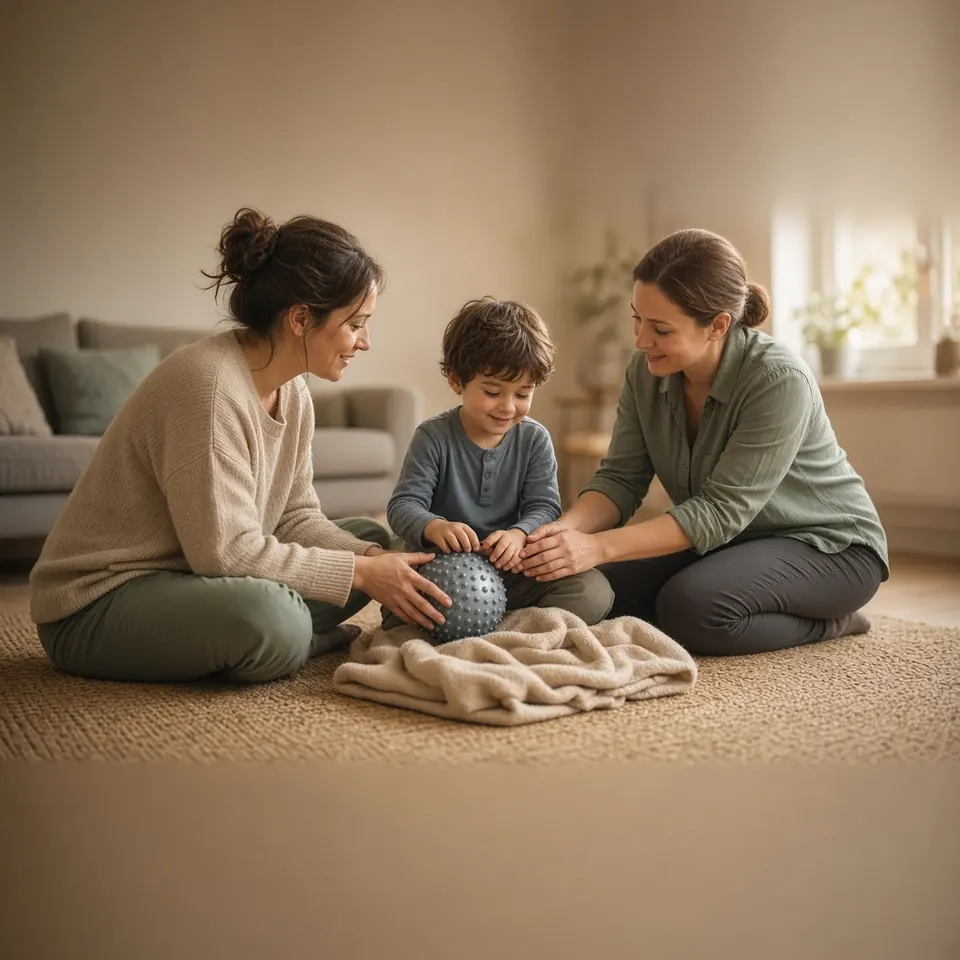
Sensory processing disorder (SPD) affects how children with autism perceive and respond to sensory input. This guide explains common signs, practical strategies for home and community, and how New Jersey families can access in-home ABA therapy through Liftoff ABA with no waitlists.
If your child with autism seems to react strongly to everyday sounds, textures, or lights, you may be witnessing the effects of sensory processing disorder (SPD). SPD is not a separate diagnosis but a common co-occurring challenge that affects how the brain receives and responds to sensory information. For parents in New Jersey, understanding SPD and learning practical strategies can make a world of difference in your child's comfort and daily functioning. This guide walks you through the basics of SPD, recognizable signs, and actionable steps you can take at home and in the community. We also highlight how in-home ABA therapy from Liftoff ABA can support your child's sensory needs with personalized, BCBA-designed plans and no waitlists.
What Is Sensory Processing Disorder?
Sensory processing disorder refers to difficulties in organizing and responding to information that comes through the senses. While all children may have occasional sensory quirks, SPD involves persistent and intense reactions that interfere with everyday activities. Children with SPD may be over-responsive (hypersensitive) or under-responsive (hyposensitive) to stimuli such as touch, sound, light, smell, taste, balance, and body awareness (proprioception).
In children with autism, SPD is especially common. Research suggests that over 80% of autistic children experience significant sensory differences. These differences can lead to meltdowns, avoidance behaviors, or intense seeking of certain sensations. Understanding the specific pattern your child exhibits is the first step toward effective support.
Common Signs of SPD in Children with Autism
Over-Responsive (Hypersensitive) Signs
- Auditory: Covering ears at everyday sounds like a vacuum cleaner, flushing toilet, or crowd noise.
- Tactile: Refusing to wear certain fabrics, tags, or seams; avoiding messy play; distressed by light touch.
- Visual: Squinting at bright lights, avoiding eye contact, overwhelmed by busy visual environments.
- Oral: Picky eating with strong aversions to textures, temperatures, or tastes; gagging on certain foods.
Under-Responsive (Hyposensitive) Signs
- Sensory seeking: Craving deep pressure, crashing into furniture, spinning, or chewing on non-food items.
- Low registration: Not noticing when touched, failing to respond to name, appearing oblivious to pain or temperature.
- Poor body awareness: Clumsiness, difficulty with fine motor tasks, bumping into objects.
It is important to note that some children can be both over- and under-responsive in different sensory domains. Observing patterns across multiple settings will help you and your team tailor interventions.
Practical Strategies for the Home Environment
Your home can be a sanctuary where sensory challenges are minimized and coping skills are built. Here are several evidence-informed strategies that many New Jersey families find helpful.
Create a Sensory-Friendly Space
Designate a calm corner or room with dim lighting, soft cushions, and quiet toys. Use blackout curtains to reduce visual stimulation. A small tent or canopy can provide a sense of security when your child feels overwhelmed.
Implement a Sensory Diet
A sensory diet is a scheduled set of activities designed to meet your child's sensory needs throughout the day. Examples include:
- Proprioceptive input: Animal walks, pushing a cart, wall push-ups, or carrying heavy laundry.
- Vestibular input: Swinging, rocking, spinning in a safe chair.
- Tactile input: Playing with Play-Doh, rice bins, or shaving cream.
- Oral input: Chewing crunchy snacks, using a vibrating toothbrush, or offering chewable jewelry.
An occupational therapist or a BCBA can help you design a personalized sensory diet for your child.
Use Visual Supports and Predictable Routines
Visual schedules with pictures or icons can reduce anxiety by showing what comes next. Timers and countdowns help prepare your child for transitions. Consistency in daily routines also supports sensory regulation.
Offer Calming Input
Weighted blankets, lap pads, or compression vests can provide deep pressure that calms the nervous system. Slow rocking or gentle massage can also help your child self-regulate.
Strategies for Community Outings
Sensory challenges often intensify outside the home. With planning and preparation, you can make trips to the grocery store, library, or playground more manageable.
- Prepare ahead: Use social stories to explain where you are going and what to expect. Bring a sensory kit with noise-canceling headphones, a favorite fidget, and a snack.
- Choose quiet times: Visit stores or parks during off-peak hours to avoid crowds and noise.
- Take breaks: Have a plan for exiting quickly if your child becomes overwhelmed. Identify quiet spots (e.g., a bathroom, a bench) where you can regroup.
- Practice: Start with short, low-stress outings and gradually increase duration and complexity. Praise your child's efforts.
Remember that every child is different. What works for one may not work for another, so be patient and flexible.
How ABA Therapy Can Help
Applied behavior analysis (ABA) therapy is a well-supported approach for helping children with autism build skills and reduce challenging behaviors. When it comes to SPD, an ABA therapist-especially a Board Certified Behavior Analyst (BCBA)-can assess the function of sensory-related behaviors and design interventions that address both the sensory need and the skill deficit.
For families in New Jersey, Liftoff ABA provides in-home ABA therapy with a focus on individualized, BCBA-designed plans. Each child is paired with one dedicated therapist who works in your home environment, making it easier to incorporate sensory strategies directly into daily routines. Most families start within weeks, no waitlists, and Liftoff ABA accepts most major insurance plans, including NJ Medicaid (NJ FamilyCare). The BCBA will also help you coordinate with other providers, such as occupational therapists, to ensure a comprehensive approach.
ABA can teach your child to tolerate sensory input gradually (desensitization), request breaks using a communication system, and engage in calming activities independently. By addressing the underlying function of sensory-related behaviors, ABA helps your child build lasting coping skills.
New Jersey Resources for Families
New Jersey has robust supports for children with autism and sensory processing challenges. Below are key resources for families in the Garden State.
- New Jersey Early Intervention System (NJEIS): For children under age 3, NJEIS offers evaluations and services for developmental delays, including sensory concerns. Services are provided at no cost to families and can include occupational and ABA therapy.
- NJ Medicaid (NJ FamilyCare): This state-funded health insurance covers ABA therapy for eligible children diagnosed with autism. Liftoff ABA works with NJ FamilyCare and verifies benefits for free, so you know what is covered.
- PerformCare: Under contract with the NJ Department of Children and Families, PerformCare helps families access behavioral health services, including intensive in-home ABA for children with more complex needs.
- County Special Services School Districts: Many counties in New Jersey, such as Middlesex, Monmouth, and Bergen, operate special services school districts that provide specialized programs for students with autism and sensory disabilities. Your school district child study team can assist with an evaluation and individualized education plan (IEP).
- Parent Training and Information Centers: Organizations like SPAN Parent Advocacy Network (based in Newark) offer free workshops on navigating school systems, insurance, and therapies.
With these resources, and the right provider like Liftoff ABA-you can build a strong support network for your child's sensory and developmental needs.
Final Thoughts
Navigating sensory processing disorder can feel overwhelming, but you are not alone. By understanding your child's unique sensory profile, implementing practical strategies, and accessing appropriate therapies, you can help your child feel more comfortable and engaged in daily life. In-home ABA therapy from Liftoff ABA provides a compassionate, evidence-based option for New Jersey families, with BCBA-designed plans and no waitlists. To learn more about your insurance coverage or to schedule a free consultation, call (973) 436-5835. Your journey toward supporting your child's sensory well-being starts today.
- SPD often co-occurs with autism and involves over- or under-responsiveness to sensory stimuli.
- Signs include extreme reactions to sounds, textures, lights, or movement.
- Strategies like sensory diets, weighted items, and visual supports can help.
- New Jersey families have access to in-home ABA therapy through Liftoff ABA, with BCBA-designed plans and no waitlists.
- NJ Medicaid (NJ FamilyCare) covers ABA therapy for eligible children.
- Create a calm, predictable environment with sensory breaks and visual schedules.
Not sure what your plan covers?
Liftoff ABA verifies your New Jersey insurance benefits for free, no obligation, usually the same day.
Check my coverageFrequently asked questions
What is sensory processing disorder?
How do I know if my child has SPD or just autism?
What are some quick sensory strategies for meltdowns?
Does NJ Medicaid cover ABA therapy for SPD?
How do I get started with Liftoff ABA?
Start ABA therapy in New Jersey, no waitlist
We'll verify your insurance for free and map out your child's next steps. Most families start within weeks.
Apply for ABA