Liftoff ABA

Author name: yaakov

Photo ABA therapy
Misc

The Benefits of ABA Therapy for Children

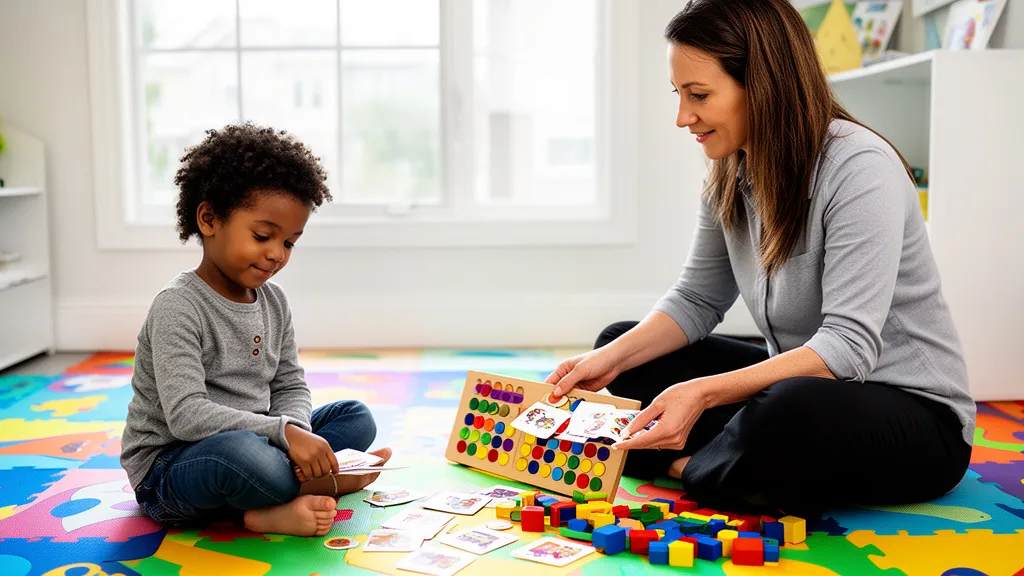
Let’s talk about ABA therapy for children. Many parents wonder, “What exactly is it, and how can it help my child?” Simply put, Applied Behavior Analysis (ABA) is a type of therapy that focuses on improving specific behaviors, such as social skills, communication, reading, and adaptive learning skills like hygiene and daily living. It’s built on a scientific understanding of how learning happens. Therapists use observational data to understand why a child behaves a certain way and then develop strategies to teach new, more effective behaviors. The goal is to help children with developmental differences, particularly autism, learn skills that allow them to live more independently and participate more fully in their communities. What is ABA, Really? ABA isn’t a one-size-fits-all solution; it’s a flexible approach tailored to each child’s needs. The core idea is to break down complex skills into smaller, manageable steps. Each step is taught systematically, with positive reinforcement used to encourage and strengthen desired behaviors. For example, if a child struggles with requesting a toy, the therapist might start by reinforcing eye contact, then a gesture, then a sound, and finally, the spoken word. Data is collected throughout the process to track progress and adjust strategies as needed. This data-driven approach ensures that the therapy remains effective and responsive to the child’s learning. The Science Behind the Practice ABA is grounded in principles of learning theory, particularly operant conditioning. This means understanding how consequences influence behavior. When a desired behavior is followed by a positive outcome, like praise or a preferred toy, it’s more likely to happen again. Conversely, if a behavior doesn’t lead to a positive outcome, or leads to an undesirable one, it’s less likely to recur. This isn’t about “training” children in a mechanical way; it’s about creating a supportive learning environment where positive behaviors are encouraged and maladaptive behaviors are gradually replaced with more functional ones. The focus is always on teaching meaningful skills that enhance a child’s quality of life. One of the most significant areas where ABA therapy can make a real difference is in developing communication skills. For children with developmental differences, particularly those on the autism spectrum, typical communication pathways can be challenging. ABA provides structured methods to help children express their needs, wants, and ideas more effectively. Developing Functional Language Many children beginning ABA therapy may have limited or no spoken language. The therapy focuses on building a foundation for communication, starting with pre-linguistic skills. This could involve teaching a child to point to desired objects, make eye contact when interacting, or use simple gestures to convey meaning. Teaching Requesting (Mand Training) A core component of communication development in ABA is “mand training,” which is essentially teaching a child to request items or activities they want. This is crucial because it gives the child a functional way to interact with their environment and get their needs met. Instead of resorting to challenging behaviors out of frustration, they learn to use words or alternative communication methods. For example, if a child wants a cookie, the therapist might prompt them to say “cookie” or point to an image of a cookie, and then immediately reinforce that communication attempt by providing the cookie. This direct connection between communication and a desired outcome strengthens the likelihood of the child using that communication in the future. Improving Conversational Skills Beyond just making requests, ABA also addresses more complex conversational skills. This includes teaching children how to initiate conversations, take turns speaking, ask relevant questions, and respond appropriately to others. Therapists use role-playing and structured social scenarios to practice these skills in a safe and controlled environment. These activities help children generalize these skills to real-life situations. The goal is to move beyond rote responses and foster genuine, spontaneous interactions. Understanding Non-Verbal Cues Communication isn’t just about words. Non-verbal cues like facial expressions, body language, and tone of voice play a huge role in how we understand each other. Children receiving ABA therapy are often explicitly taught to recognize and interpret these cues. This can involve matching emotions to facial expressions, understanding the meaning of different postures, or recognizing subtle shifts in tone. By improving their understanding of non-verbal communication, children can better navigate social situations and respond more appropriately. If you’re interested in learning more about the benefits and applications of ABA therapy, you might find this related article insightful: Understanding ABA Therapy: Techniques and Benefits. This resource provides a comprehensive overview of various ABA techniques, their effectiveness in treating behavioral challenges, and how they can be tailored to meet individual needs. Improved Social Interaction Another key benefit of ABA therapy is its ability to help children navigate the complexities of social interaction. This is often an area where children with developmental differences face significant hurdles, which can lead to isolation and frustration. ABA provides structured strategies to teach and reinforce desirable social behaviors. Learning Play Skills For many children, successful social interaction starts with play. ABA helps children develop various play skills, from simple parallel play (playing alongside others) to more complex cooperative play. This can involve teaching them how to share toys, take turns, understand game rules, and engage in imaginative play scenarios. Therapists create opportunities for guided play, using prompts and reinforcement to encourage positive interactions. For instance, if a child struggles with turn-taking, the therapist might use a visual timer or verbal prompts to guide them through the process, reinforcing successful turns with praise or preferred activities. This structured approach helps children build a repertoire of play skills that makes them more engaging playmates. Understanding Social Cues and Norms Social situations are often governed by unwritten rules and subtle cues. Children in ABA therapy are often taught to identify and respond to these. This might include understanding personal space, recognizing when someone wants to join a game, or knowing how to greet someone appropriately. Therapists might use social stories, visual aids, and role-playing to help children grasp these concepts. The aim is to demystify social interactions and
Photo ABA Therapy
Misc

RBT vs BCBA: Who Works With Your Child in ABA Therapy?

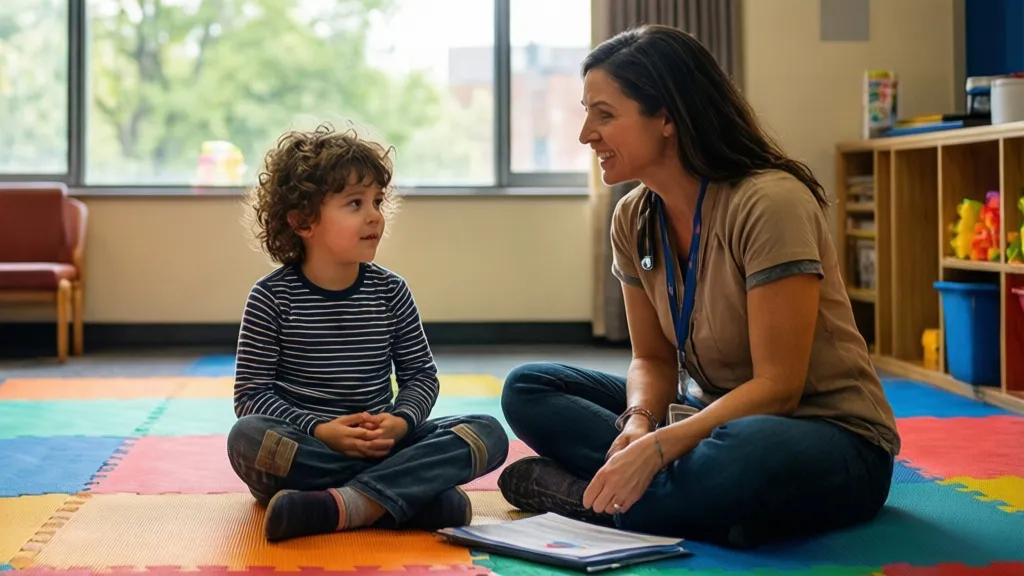
When your family starts your child on the rewarding path of Applied Behavior Analysis (ABA) therapy, you will come across a group of committed experts. To fully appreciate the all-encompassing support your child receives, you must comprehend the roles of each member. Two acronyms that are commonly used in this field are BCBA & RBT. Despite the fact that both are essential to an effective ABA intervention, their roles, backgrounds, and areas of expertise are very different. By demystifying these positions, you will be able to comprehend who works with your child & why each professional is essential. Envision constructing an amazing treehouse for your child. An expert architect would create the blueprints, a skilled carpenter would build the frame, & a painstaking painter would add the vivid colors. You wouldn’t expect one person to design the complex plans, see every piece of wood, and paint the finishing touches all by themselves, would you? When considering the differences between Registered Behavior Technicians (RBTs) and Board Certified Behavior Analysts (BCBAs) in the context of Applied Behavior Analysis (ABA) therapy, it’s essential to understand the evolving landscape of the field. A related article that delves into the latest research findings in ABA therapy can provide valuable insights into how these roles contribute to effective treatment strategies. You can read more about these advancements in ABA therapy by visiting this link: Advancing ABA Therapy: New Research Findings. In a similar vein, ABA therapy uses a team approach to guarantee that your child gets specialized help at every stage. This cooperative strategy optimizes the efficacy of interventions, customizes programs to your child’s specific requirements, and offers continuous supervision for the best possible development. The Reasons ABA Needs a Team. ABA therapy is a dynamic, customized process rather than a one-size-fits-all approach. Using a team approach guarantees that different viewpoints and skill sets are applied to your child’s development. This makes: possible. Comprehensive Assessment: A thorough examination of your child’s advantages and shortcomings. Customizing interventions to meet particular objectives and learning preferences is known as individualized program design. Consistent Implementation: Effectively providing therapy in a variety of contexts. Continuous Monitoring and Modification: Making sure that as your child grows, programs stay applicable and efficient. Parental Support and Training: Encouraging families to maintain tactics at home. The Registered Behavior Technician (RBT), who spends the most time actively interacting with your child during therapy sessions, should be viewed as the direct care provider. When considering the best approach to Applied Behavior Analysis (ABA) therapy for your child, understanding the roles of different professionals can be crucial. A related article that delves deeper into this topic is available at RBT vs BCBA: Who Works With Your Child in ABA Therapy?, which outlines the distinctions between Registered Behavior Technicians and Board Certified Behavior Analysts. This resource can help parents make informed decisions about the type of support their child will receive, ensuring that they are matched with the right professionals for their specific needs. Aspect Registered Behavior Technician (RBT) Board Certified Behavior Analyst (BCBA) Role Implements ABA therapy directly with the child under supervision Designs, supervises, and oversees ABA therapy programs Education Requirements High school diploma or equivalent; completion of RBT training Master’s degree or higher in behavior analysis or related field Certification RBT credential from BACB after training and competency assessment BCBA certification from BACB after graduate coursework and exam Supervision Works under direct supervision of a BCBA Provides supervision to RBTs and other staff Responsibilities Conducts therapy sessions, collects data, follows treatment plans Develops treatment plans, analyzes data, adjusts interventions Interaction with Child Direct, hands-on interaction during therapy sessions Indirect interaction; primarily supervises and consults Typical Work Hours Varies; often part-time or full-time therapy sessions Varies; includes clinical, supervisory, and administrative duties They carry out the behavioral intervention plans created by the BCBA on a front-line basis. They have a direct impact on your child’s learning and skill development & are essential to the regularity and intensity of therapy. A RBT is a person. An RBT is a paraprofessional who has been certified by the Behavior Analyst Certification Board (BACB) to offer direct, one-on-one ABA therapy services while being closely supervised by a certified BCBA. As part of a more comprehensive treatment plan, they are trained to carry out skill-building and behavior-reduction plans. RBT certification & training. A structured training and certification process is required to become an RBT in order to guarantee that they have the core competencies required for direct service delivery. Important elements are as follows. Age and Education: You must have completed high school or its equivalent & be at least eighteen years old. 40-Hour Training Course: This comprehensive course covers specific intervention techniques, data collection methods, ethical guidelines, and ABA principles. The following topics are frequently discussed. Behavior measurement (e.g. “g.”. ABC data, duration, frequency, etc.). Assessment methods (e.g. “g.”. preference analyses). Acquisition of skills (e. (g). discrete trial instruction, instruction in the natural world, and chaining). decrease in behavior (e.g. A g. extinction, and differential reinforcement). Reporting & documentation (e.g. The g. session notes, graphing). Professional standards and ethical behavior. Competency Assessment: A BCBA or BCaBA will conduct a practical assessment of candidates following the completion of the 40-hour training. This evaluation confirms that they can successfully complete tasks outlined in the RBT Task List in a simulated or actual environment. RBT Examination: Passing a proctored, standardized test given by the BACB, which assesses their comprehension of the RBT Task List, is the last step. Ongoing Supervision: RBTs must receive ongoing supervision from a certified BCBA or BCaBA for at least 5% of the monthly hours they spend offering ABA services in order to retain their certification. This ongoing supervision guarantees professional growth, adherence to ethical standards, & high-quality care. What an RBT Does During a Normal Session. An RBT engages in a variety of activities during a therapy session that are guided by the child’s customized treatment plan. These activities often include:. Direct Program Implementation: This is their main

Scroll to Top