Navigating Your Child’s Developmental Journey
For parents in New Jersey who have recently received an autism diagnosis for their child, the sheer volume of recommended interventions can feel overwhelming. You will likely hear two terms more than any others: Applied Behavior Analysis (ABA) and Speech-Language Pathology (SLP). While both are gold-standard treatments, they approach development from very different angles.
When weighing aba therapy vs speech therapy for autism, the most important thing to understand is that these are not competing treatments. Rather, they are complementary tools. One focuses on the why and how of behavior, while the other focuses on the mechanics and functional use of language.
Whether your child needs ABA therapy, speech therapy, or both depends on their specific challenges. ABA therapy is best for reducing maladaptive behaviors and teaching foundational life skills through positive reinforcement. Speech therapy is best for improving articulation, expanding vocabulary, and developing functional communication (verbal or non-verbal). Most children with autism benefit from a multidisciplinary approach using both therapies simultaneously.
Comparing the Core Objectives: ABA vs Speech Therapy
To make an informed decision, it is helpful to look at what each therapy is actually trying to achieve. While there is overlap—especially in the realm of communication—the clinical goals are distinct.
What Exactly Is ABA Therapy?

Applied Behavior Analysis (ABA) is a scientific approach to understanding behavior. It is based on the principle that behaviors followed by a positive consequence are more likely to be repeated. According to Autism Speaks, ABA is designed to increase helpful behaviors and decrease harmful or obstructive ones.
ABA doesn’t just “fix” behaviors; it teaches the child how to navigate the world. This includes everything from toilet training and dressing themselves to social cues and reducing tantrums. In New Jersey, ABA is often delivered by a team involving a Board Certified Behavior Analyst (BCBA) and a Registered Behavior Technician (RBT). If you are curious about the roles within this team, you may find our guide on RBT vs BCBA: Who Works With Your Child in ABA Therapy? helpful.
What Exactly Is Speech Therapy?
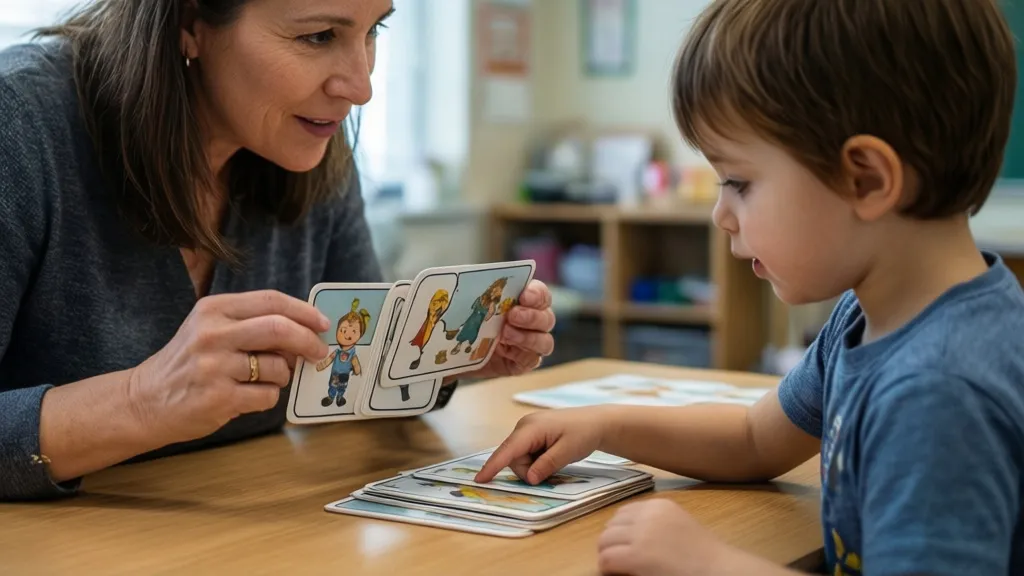
Speech therapy, or speech-language pathology, focuses on communication. This is not just about “talking.” As noted by the American Speech-Language-Hearing Association (ASHA), speech therapy encompasses language processing, social communication (pragmatics), and the physical production of sounds.
For a child with autism, a speech therapist might work on using a device (AAC), improving eye contact while speaking, or understanding the nuance of a conversation. For some children, the struggle isn’t autism-related but a standalone issue; understanding the difference between language delay vs autism can help you tailor the therapy approach.
ABA Therapy vs Speech Therapy for Autism: Key Differences
To better visualize the differentiation, consider the following comparison of their primary focuses:
| Feature | ABA Therapy | Speech Therapy |
|---|---|---|
| Primary Goal | Behavioral modification & skill acquisition | Effective communication & language use |
| Methodology | Positive reinforcement, Discrete Trial Training (DTT) | Phonetic exercises, visual aids, social scripts |
| Common Targets | Tantrums, self-care, following directions | Stuttering, vocabulary, non-verbal cues |
| Focus Area | Environmental triggers & consequences | Cognitive and physical language processing |
Signs Your Child May Need One Over the Other (Or Both)
While a clinician will provide a formal recommendation, parents often notice specific patterns that point toward a particular need. Here is a guide to the “red flags” for each therapy type.
When to Prioritize ABA Therapy
- Maladaptive Behaviors: Your child engages in self-injury, aggression, or severe tantrums.
- Lack of Basic Life Skills: Your child struggles with potty training, dressing, or eating.
- Non-Compliance: Your child has extreme difficulty following simple instructions or transitioning between activities.
- Safety Concerns: Your child elopes (runs away) or doesn’t understand basic safety boundaries.
When to Prioritize Speech Therapy
- Limited Vocabulary: Your child is not meeting age-appropriate milestones for word count.
- Difficulty Expressing Needs: Your child becomes frustrated because they cannot tell you what they want.
- Articulation Issues: Other people struggle to understand the sounds your child is making.
- Social Pragmatics: Your child can speak but doesn’t understand how to take turns in a conversation or read facial expressions.
It is common for children to present with a mix of these. For example, a child might have a tantrum (behavioral) because they cannot ask for a snack (communication). In this case, ABA treats the tantrum, while speech therapy provides the tool to ask for the snack. You can read more about these intersecting needs in our detailed look at speech therapy vs aba for autism.
The Synergy: Why the Combined Approach Works Best
In the clinical world, we rarely see these therapies in a vacuum. The most successful outcomes in New Jersey clinics occur when the BCBA and the Speech-Language Pathologist (SLP) communicate and align their goals. This is known as a multidisciplinary approach.
When ABA and speech therapy work together, the results are compounded. For instance, if a speech therapist introduces a new communication board (AAC), the ABA therapist can then use positive reinforcement to encourage the child to use that board throughout the day in various environments. This ensures that the skill learned in the speech room is generalized to the home and community.
Furthermore, some children may have comorbid conditions. Understanding autism vs adhd or distinguishing between social communication disorder vs autism can help the therapy team adjust the intensity and focus of both ABA and speech interventions.
Specialized Interventions: Beyond Speech and Behavior
As your child progresses, you may find that other specialized therapies are necessary. For example, some children with autism struggle with sensory processing related to food. In these cases, parents may need to weigh Feeding Therapy vs. ABA for Picky Eaters: What NJ Parents Should Know to determine if the issue is sensory-based or behavioral.
Frequently Asked Questions
Yes. In fact, it is highly recommended. Because they target different systems (behavior vs. communication), they complement each other and often lead to faster progress.
This depends on your child’s immediate needs. If safety and severe behaviors are the priority, ABA is often the starting point. If communication is the primary barrier to function, speech therapy is critical. A professional evaluation will determine the priority.
Speech therapy treats the communication aspects of autism, but it does not address behavioral challenges, social integration, or daily living skills. For comprehensive support, ABA is typically paired with speech therapy.
Conclusion: Choosing the Right Path for Your Child
Deciding between aba therapy vs speech therapy for autism isn’t about picking a “winner,” but about building a toolkit that fits your child’s unique profile. While ABA provides the behavioral foundation and the motivation to learn, speech therapy provides the voice and the tools for connection.
For parents in New Jersey, the goal is always the same: giving your child the greatest possible independence and quality of life. By combining these evidence-based practices, you ensure that your child is supported not just in how they act, but in how they express themselves to the world.
Ready to create a customized plan for your child’s growth?
Learn More