
Starting the Journey: Navigating Your Child’s First Steps in ABA
For many parents in New Jersey, the period between receiving an autism diagnosis and starting treatment is filled with a mix of hope and anxiety. You know your child needs support, but the unknown can be daunting. If you are wondering what to expect at first aba therapy session, you are not alone. This first encounter isn’t about rigorous academic drilling or immediate behavioral correction; rather, it is about building a foundation of trust, observation, and partnership.
The first ABA therapy session typically focuses on “pairing,” where the therapist builds a positive relationship with your child through play and preferred rewards. Rather than jumping straight into a curriculum, the therapist observes your child’s natural interests and behaviors to inform the initial assessment. Parents can expect a mix of observation, introductory activities, and a conversation with the provider about the child’s strengths and challenges.
Understanding the process helps lower the stress level for the entire family. When parents are calm and prepared, children often mirror that energy, making the transition into Autism Therapy in NJ much smoother. Whether you are visiting a center or receiving services in your home, the primary goal is to make your child feel safe and successful.
The Core Goals of the First ABA Therapy Session

It is a common misconception that a child will walk into their first session and immediately begin working on a complex set of goals. In reality, the first session is an onboarding phase. The clinical team is focused on several key objectives:
The Concept of “Pairing”
In the world of Applied Behavior Analysis (ABA), pairing is the process of associating the therapist with things the child loves. The therapist becomes a “giver of good things.” Instead of asking the child to perform tasks, the therapist joins the child in their favorite activities—whether that is lining up cars, jumping on a trampoline, or playing with bubbles.
By pairing, the therapist ensures that the child views them as a source of reinforcement rather than a source of demands. This builds the rapport necessary for the more structured learning that will follow in later weeks.
Baseline Observation
While they are playing, the therapist is also working. They are observing how your child communicates, how they react to sensory stimuli, and what motivates them. This baseline data is critical. According to the Cleveland Clinic, ABA is highly individualized, and these early observations help the Board Certified Behavior Analyst (BCBA) tailor the program to your child’s specific needs.
Who Will Be in the Room?
Depending on the clinic’s structure, you may interact with different professionals. It is helpful to understand the hierarchy of care so you know who to go to for specific questions. If you are unsure about the roles, you can read more about RBT vs BCBA: Who Works With Your Child in ABA Therapy?
- BCBA (Board Certified Behavior Analyst): The “architect” of the program. They design the goals, analyze the data, and oversee the overall progress.
- RBT (Registered Behavior Technician): The “builder.” They are the ones implementing the program directly with your child on a daily basis.
- The Parents: You are the most important member of the team. Your insights into your child’s history and preferences are invaluable.
Comparing the First Session vs. Ongoing Therapy
To help manage your expectations, it is useful to see how the initial visit differs from a typical day of therapy once the program is fully established.
| Feature | First Session | Ongoing Therapy |
|---|---|---|
| Primary Focus | Pairing and Rapport Building | Skill Acquisition and Behavior Reduction |
| Structure | Flexible, Play-Based | Scheduled, Goal-Oriented |
| Parent Role | Providing History & Observation | Collaborating on Parent Training |
| Expected Outcome | Comfort and Trust | Measurable Progress toward Goals |
Practical Tips to Help Your Child Transition
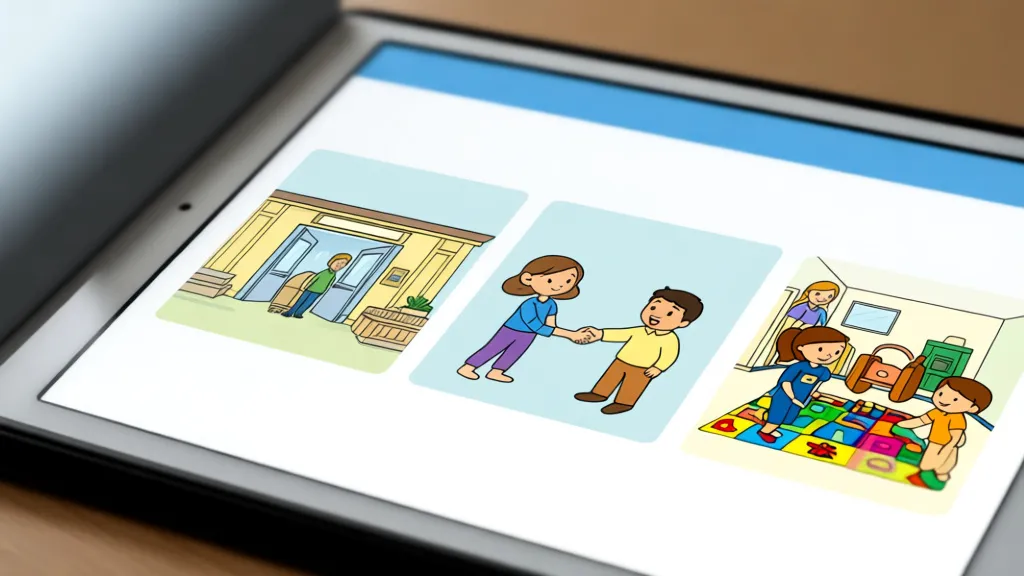
Reducing anxiety starts before you even leave the house. For children with autism, transitions to new environments can be a trigger for stress. Here are several strategies to prepare your child:
Use Visual Aids and Social Stories
Social stories are short, simple descriptions of a situation that help a child understand what will happen. You can create a simple book with photos of the clinic, the parking lot, and the therapy room. This removes the “surprise” element and gives the child a mental roadmap of the experience.
Bring “Comfort Objects”
Allow your child to bring a favorite toy, blanket, or sensory item. This not only provides emotional security but also gives the therapist an immediate tool for pairing. If your child loves a specific dinosaur, having that dinosaur present allows the therapist to engage with the child on their own terms.
Keep the Language Positive and Simple
Avoid over-promising or using confusing language. Instead of saying, “You’re going to a school for kids with autism,” try, “We are going to a place with lots of toys to meet a new friend who wants to play with you.” Keep it light and low-pressure.
Common Parental Concerns During the First Visit
It is completely normal to feel a range of emotions during this visit. Some parents feel a sense of relief, while others feel guilty or overwhelmed. Here are a few common questions we hear from NJ families:
“What if my child has a meltdown?”
Therapists are trained to handle behavioral challenges. In fact, seeing how your child reacts to a new environment is part of the assessment. A meltdown is not a “failure” of the first session; it is valuable information that helps the BCBA understand your child’s triggers and how to best support them.
“Should I stay in the room or leave?”
This varies by child and provider. Some children transition better when a parent is present, while others become too dependent on the parent and struggle to bond with the therapist. Your BCBA will provide a recommendation based on your child’s specific needs. You can learn more about how these decisions are made by exploring Autism Speaks’ overview of ABA.
“How soon will I see progress?”
ABA is a marathon, not a sprint. While you may see immediate improvements in how your child interacts with the therapist, significant behavioral changes take time and consistency. To get a better idea of the timeline, you may want to consider how many hours of ABA therapy your child needs based on their specific goals.
Frequently Asked Questions
A: Most providers handle intake paperwork digitally. However, it is always a good idea to have a copy of your child’s most recent diagnostic report and any IEP (Individualized Education Program) from school if applicable.
A: No. The first session is about building a relationship. Attempting to correct behaviors before trust is established can actually hinder progress. First, we build the bond; then, we build the skills.
A: Chemistry matters. While most therapists are highly skilled at pairing, sometimes a specific personality match is needed. If the rapport isn’t forming, the BCBA can adjust the approach or the staffing to ensure your child feels comfortable.
Conclusion: Embracing the First Step
The road to progress begins with a single, often nerve-wracking visit. By focusing on pairing, observation, and family collaboration, the onboarding process is designed to be a gentle entry into a life-changing therapy. Now that you know what to expect at first aba therapy session, you can focus on what truly matters: supporting your child as they discover their potential.
If you’ve noticed signs your child may benefit from ABA therapy, the best time to start is when you feel prepared and supported. Our team in New Jersey is dedicated to making this transition as seamless as possible for your entire family.