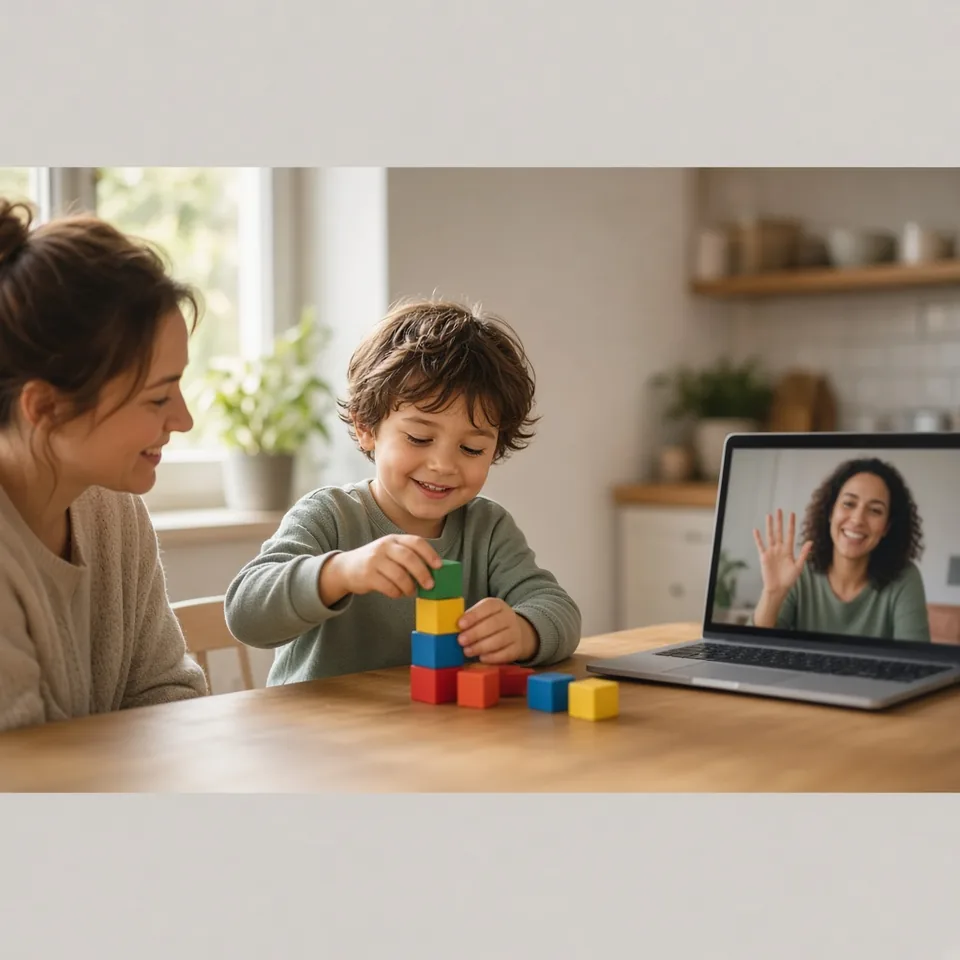
Telehealth ABA therapy can be a helpful supplement for New Jersey families, offering flexibility and easier access to parent training. However, it lacks the direct in-person interaction that is often essential for children with autism, especially for behavior intervention and data collection. Liftoff ABA provides primarily in-home, BCBA-designed therapy across NJ, with no waitlists, and uses telehealth as a complementary tool for parent coaching and brief check-ins.
Introduction: The Role of Telehealth in ABA Therapy
Telehealth for Applied Behavior Analysis (ABA) therapy became a necessity during the COVID-19 pandemic, and many families and providers continue to use it today. For New Jersey parents of children with autism, telehealth ABA offers a way to receive guidance and intervention without leaving home. However, it is not a one-size-fits-all solution. This post explores the pros and cons of telehealth ABA, shares best practices for making it work, and offers NJ-specific guidance. Liftoff ABA, a New Jersey-based in-home ABA provider with no waitlists, uses telehealth as a complement to its primary in-home model-never as a replacement for direct, BCBA-led care.
Pros of Telehealth ABA
Flexibility and Convenience
Telehealth eliminates travel time for both therapists and families. Sessions can be scheduled during evenings or weekends more easily, accommodating busy family routines. This is especially helpful for NJ families who may commute across counties for services.
Greater Access to BCBA Expertise
Telehealth allows families to work with Board Certified Behavior Analysts (BCBAs) who may not be geographically close. This can be valuable in areas of New Jersey where there is a shortage of qualified ABA providers. Some BCBAs offer telehealth parent training that can be more consistent than in-person visits.
Enhanced Parent Training and Coaching
One of the strongest use cases for telehealth ABA is parent training. A BCBA can observe the child in their natural home environment and coach the parent in real time. Parents often feel more comfortable asking questions via video, and they can practice interventions with immediate feedback.
Reduced Stress for Some Children
For children who experience anxiety from having a stranger in their home, telehealth can be less intimidating. The child may interact more naturally with their parent while the BCBA observes and guides from a screen.
Cons of Telehealth ABA
Limited Direct Intervention
ABA therapy is most effective when it involves direct, in-person interaction. A therapist cannot physically prompt a child, redirect behavior with gentle touch, or engage in natural environment teaching as effectively through a screen. For children who require hands-on support, telehealth alone is insufficient.
Challenges with Engagement and Attention
Young children and those with significant attention difficulties may struggle to stay engaged with a screen. The therapist has limited ability to capture and redirect the child's focus. This can lead to less productive sessions.
Technology and Connectivity Barriers
Reliable high-speed internet is not guaranteed in every home, especially in rural parts of NJ. Parents must have a suitable device and a quiet space. Technical glitches can disrupt sessions and frustrate everyone.
Reduced Data Collection Accuracy
Direct observation and data collection-crucial for measuring progress-are more challenging via video. The BCBA may miss subtle behaviors or environmental cues. Parent-reported data can be less reliable.
Best Practices for Successful Telehealth ABA
Set Up a Dedicated Space
Designate an area with good lighting, minimal distractions, and a stable internet connection. Keep preferred toys and materials within reach but not in view until needed. A whiteboard or visual schedule can help structure the session.
Prepare Materials Ahead of Time
Before each session, the BCBA should email or message a list of materials required. Parents should gather items like flashcards, token boards, reinforcers, and any data sheets. This prevents interruptions.
Use a Second Device for Live Observations
If possible, use a second tablet or phone positioned to show the full play area. This allows the BCBA to see both the child and the parent. A headset can improve audio clarity for the BCBA.
Prioritize Parent Coaching
Telehealth ABA should focus heavily on building the parent's skills. The BCBA can model through video, then ask the parent to implement the strategy while receiving feedback. This empowers parents to carry over techniques between sessions.
Establish Clear Session Structure
Start with a brief check-in, then move to direct parent coaching, followed by a review of data and homework. Keep sessions to 30-45 minutes for young children. Use timers and visual cues to signal transitions.
NJ-Specific Considerations for Telehealth ABA
Insurance Coverage in New Jersey
New Jersey has a strong autism insurance mandate (the 2009 law requiring coverage for ABA). Many private insurers cover telehealth ABA, especially after the pandemic. NJ Medicaid (NJ FamilyCare) also covers ABA via telehealth for eligible children. Always verify benefits with your plan. Liftoff ABA accepts most major insurance and NJ FamilyCare, and offers free benefit verification.
NJ Early Intervention (NJEIS) and PerformCare
For children under three, NJEIS may provide telehealth ABA or parent coaching. For older children with more intensive needs, PerformCare (the NJ Children's System of Care) coordinates behavioral health supports, including ABA. Telehealth can be used for these services, but direct in-person care is often required for the most intensive hours.
Public School and County Special Services
Many NJ county special services school districts offer ABA in classroom settings, some with telehealth components for consultation. However, telehealth is rarely a substitute for the in-person paraprofessional support these districts provide.
Combining Telehealth with In-Home Therapy: Liftoff ABA's Approach
At Liftoff ABA, we believe the gold standard is in-home, BCBA-designed therapy delivered by a dedicated therapist. But we also recognize the value of telehealth as a tool. Our families in New Jersey typically receive all direct therapy hours in their home, with a BCBA supervising in person on a regular schedule. Telehealth is used for: periodic parent training sessions, brief check-ins to adjust programs, and progress review meetings. This hybrid approach ensures children get the hands-on intervention they need while families enjoy the convenience of remote coaching. Most importantly, we have no waitlists-families start within weeks of their initial call. Call (973) 436-5835 to learn how we can combine in-home and telehealth support for your child.
Conclusion
Telehealth ABA can be a valuable part of a comprehensive autism therapy plan, but it works best when paired with direct in-home care. For New Jersey families weighing the pros and cons, the key is to choose a provider that tailors the service delivery to your child's needs. Liftoff ABA offers in-home therapy as the foundation, backed by BCBA expertise and no waitlists, with telehealth as an added layer of support. Whether you're just starting your ABA journey or looking for a new provider, contact us today to discuss how we can help your child thrive.
- Telehealth ABA works best as a supplement, not a replacement, for in-home therapy, especially for children who need intensive behavior support.
- Key pros include scheduling flexibility, reduced travel stress, and easier access to parent training.
- Key cons include limited ability to shape behavior in natural contexts, reduced rapport, and technology barriers.
- Best practices include setting up a distraction-free space, preparing materials in advance, and ensuring strong parent-coach collaboration.
- NJ families can often use telehealth under NJ Medicaid (NJ FamilyCare) and private insurance, but check coverage details with your provider.
- Liftoff ABA offers in-home therapy with no waitlists, and integrates telehealth as a support tool for parent coaching and progress updates.
Not sure what your plan covers?
Liftoff ABA verifies your New Jersey insurance benefits for free, no obligation, usually the same day.
Check my coverageFrequently asked questions
Is telehealth ABA effective for children with autism?
Does NJ Medicaid cover telehealth ABA therapy?
How can I prepare my home for a telehealth ABA session?
Can telehealth ABA replace in-home therapy for my child?
What are the best practices for parent involvement during telehealth ABA?
Start ABA therapy in New Jersey, no waitlist
We'll verify your insurance for free and map out your child's next steps. Most families start within weeks.
Apply for ABA