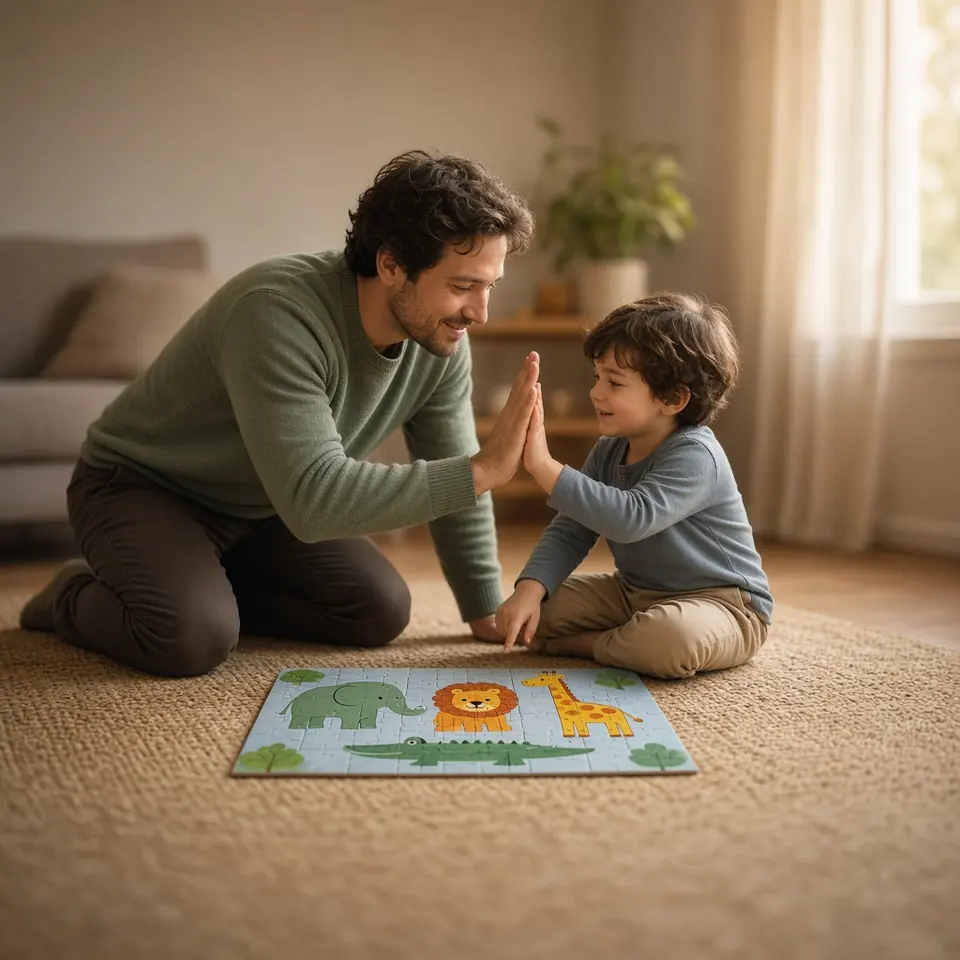
Positive reinforcement means adding a rewarding consequence after a desired behavior to increase that behavior. For children with autism, using immediate, specific praise, access to a preferred activity, or a small tangible reward can build communication, self-help, and social skills. Consistency and individualizing rewards are key.
If you're a New Jersey parent of a child with autism, you've probably heard the term positive reinforcement. It sounds simple, but putting it into practice with real, everyday examples can feel tricky. The good news is that positive reinforcement is one of the most effective tools you can use to teach new skills, reduce challenging behaviors, and build a warm, trusting relationship with your child. And you can start using it today.
This guide walks you through what positive reinforcement is, why it works, and specific examples you can try at home. We'll also touch on how New Jersey families can access professional support-like ABA therapy delivered in-home by a provider such as Liftoff ABA-to make reinforcement strategies even more effective.
What Is Positive Reinforcement?
Positive reinforcement is a core principle of Applied Behavior Analysis (ABA). It means adding something immediately after a behavior that makes that behavior more likely to happen again. The "something" is called a reinforcer.
For example: Your child says "please" when asking for a snack. You immediately give them the snack and say, "I love how you said please!" The snack plus your praise is the reinforcer. The next time they want a snack, they're more likely to say "please" again.
Positive reinforcement is not bribery. Bribery happens before the behavior (e.g., "If you stop crying, I'll give you candy"). Reinforcement happens after the desired behavior and strengthens that behavior over time.
Reinforcer vs. Reward
A reward is something given for a job well done, but it might not be motivating to the child. A reinforcer is always something the child finds motivating. What works for one child may not work for another, so it's important to observe what your child enjoys and use that as a potential reinforcer.
Why Positive Reinforcement Works for Children with Autism
Many children with autism are naturally motivated by specific interests or sensory experiences. When you connect learning to those interests, progress can accelerate. Positive reinforcement also helps children understand expectations in a clear, non-punitive way.
Research shows that reinforcement delivered consistently and immediately increases the likelihood of new skills sticking. It also builds a positive association with learning, reducing anxiety and avoidance.
For New Jersey families, this approach is at the heart of ABA therapy. Whether through New Jersey Early Intervention (NJEIS) services or school‑based programs, reinforcement strategies are individualized for each child. In-home providers like Liftoff ABA design reinforcement systems that fit into your family's daily routines, no waitlists, so you can start using these tools right away.
Positive Reinforcement Examples You Can Use Today
Here are concrete, easy‑to‑use examples grouped by type. Remember: always deliver the reinforcer within seconds of the desired behavior, and pair it with specific, genuine praise.
Social Reinforcers
- Specific verbal praise: "You put your shoes on all by yourself-awesome!"
- High‑five or fist bump: Great for quick, physical connection after a small success.
- Excited tone: A simple "Wow!" with a smile can be very reinforcing.
- Eye contact and nod: Combined with a warm expression.
Activity Reinforcers
- Extra time on a favorite activity: "You finished your homework, so you can play on the iPad for 5 extra minutes."
- Preferred video or song: Let them watch a short clip after completing a non‑preferred task.
- Outdoor play: "You asked nicely for a snack-let's go swing for a bit."
- Special time with you: 10 minutes of your undivided attention playing their favorite game.
Tangible Reinforcers
- Small toys or trinkets: Stickers, bouncy balls, or a tiny car-only given after the behavior.
- Edible reinforcers: A piece of fruit snack, a single M&M, or a pretzel (use sparingly and avoid high sugar).
- Token or sticker charts: For older children, tokens can be exchanged for a larger reward (e.g., 5 tokens = trip to the playground).
Sensory Reinforcers
- Deep pressure hug: For a child who seeks proprioceptive input.
- Swings or trampoline time: Great reinforcer after completing a demanding task.
- Playing with a sensory bin: Rice, beans, or water play as a reward for a communication effort.
Tips for Making Positive Reinforcement Work in Your NJ Home
Positive reinforcement isn't about giving treats all day. It's about strategically motivating behavior. Here's how to do it well.
Start Simple
Pick one or two behaviors you want to increase. Maybe it's sitting at the table for meals or using a word to request a drink. Focus on those first.
Use a Variety of Reinforcers
Children can get bored of the same reward. Rotate reinforcers or create a "choice board" with pictures of preferred items or activities. Let the child choose after showing the desired behavior.
Fade Prompts and Thin Reinforcement
Once a behavior becomes routine (like saying "thank you"), your praise can become more delayed or more natural. But keep some form of reinforcement intermittent, that's how skills stay strong.
Be Consistent Across Caregivers
If everyone in the household uses the same reinforcers for the same behaviors, your child learns faster. Consider writing a short list of "reinforcement phrases" for grandparents, babysitters, or respite workers.
How New Jersey Parents Can Access ABA Therapy for Skill Building
While you can absolutely use positive reinforcement on your own, many families find that professional guidance helps them tailor strategies to their child's unique needs. New Jersey has strong supports for families of children with autism.
- New Jersey's autism insurance mandate requires many health plans to cover ABA therapy, including in-home services.
- NJ Medicaid (NJ FamilyCare) also covers ABA for eligible children.
- New Jersey Early Intervention (NJEIS) provides evaluation and services for children under 3.
- PerformCare is the state's mental health and behavioral health administrative services organization; families can call to explore children's behavioral health options.
- County special‑services school districts offer related services for school‑age children.
One of the most effective ways to bring positive reinforcement into your home is through an in‑home ABA provider. Liftoff ABA serves families across New Jersey with no waitlists, most families start within weeks of their call. A Board Certified Behavior Analyst (BCBA) designs a reinforcement plan tailored to your child's goals, and a dedicated therapist works one‑on‑one in your home. They'll also help you use reinforcement strategies in daily life, so your child gains skills that last.
To get started, call Liftoff ABA at (973) 566‑3180 or visit their website. They accept most major insurances and NJ FamilyCare, and they verify your benefits for free.
Common Mistakes to Avoid with Positive Reinforcement
Even well‑intentioned parents can slip into habits that reduce the power of reinforcement. Watch for these pitfalls:
- Delaying the reinforcer: A reward given an hour later loses its connection to the behavior. Aim for within 3 seconds at first.
- Over‑using tangibles: You want your child to eventually be motivated by natural social praise, not only candy or toys. Pair tangibles with enthusiastic praise from the start.
- Using reinforcers that aren't reinforcing: If your child doesn't care about stickers, don't use them! Observe what they gravitate toward during free play.
- Giving reinforcement for free: If the child gets the iPad whenever they want, it won't work as a reinforcer. Keep preferred items available only after effort.
- Ignoring small successes: Catch your child being good. A small step like looking at you when you call their name deserves reinforcement.
Final Thoughts
Positive reinforcement changes behavior and builds relationship. It's compassionate, evidence‑based, and something you can put into action right now. Start with one small behavior, choose a reinforcer your child loves, and be consistent. Over time, you'll see more cooperation, more communication, and more joyful interactions.
If you want extra support, whether you're just starting or feel stuck-consider working with an in‑home ABA provider in New Jersey. Liftoff ABA's BCBAs and therapists are ready to help, with no waitlists and a focus on positive, family‑centered care. Call (973) 566‑3180 to learn more.
- Positive reinforcement is research‑backed and central to ABA therapy.
- Use immediate, specific praise like "Great job putting your dish in the sink!" instead of vague praise.
- Pair social rewards (high‑fives, kind words) with other reinforcers to build natural motivation.
- Token systems work well for older children; keep them simple and visual.
- Always choose reinforcers that are truly rewarding for your child, not what you assume they like.
- New Jersey's autism insurance mandate covers ABA therapy, including in-home services like those from Liftoff ABA.
Not sure what your plan covers?
Liftoff ABA verifies your New Jersey insurance benefits for free, no obligation, usually the same day.
Check my coverageFrequently asked questions
What is the difference between positive reinforcement and bribery?
Can I use positive reinforcement with a child who is non‑verbal?
Does New Jersey's autism insurance mandate cover ABA therapy for positive reinforcement strategies?
How quickly should I deliver a reinforcer after my child's behavior?
What should I do if my child loses interest in a reinforcer?
Start ABA therapy in New Jersey, no waitlist
We'll verify your insurance for free and map out your child's next steps. Most families start within weeks.
Apply for ABA